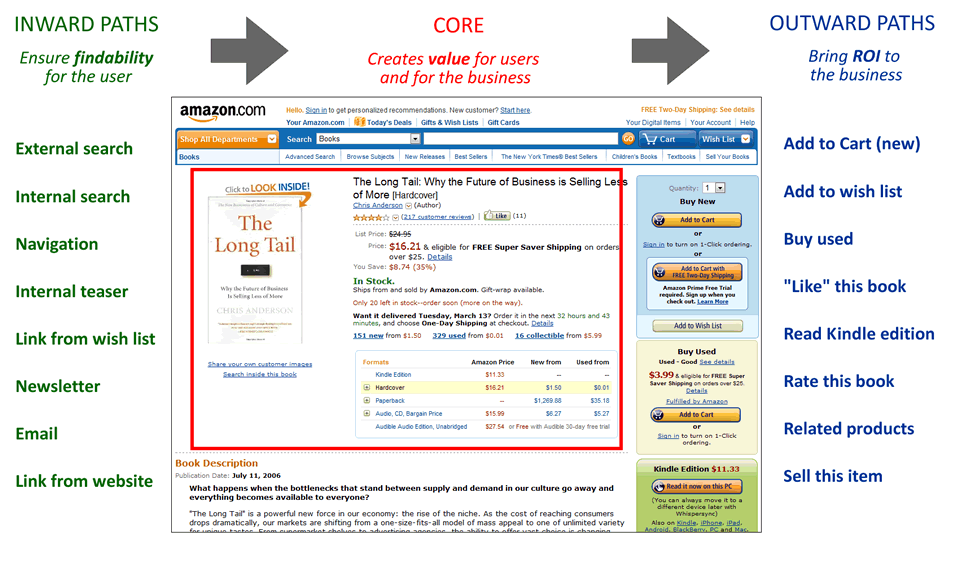
Cores and Paths is a technique to guide you through the process of creating straight paths to the core offerings on your site.
Conventional web design approach: homepage > navigation > primary content
The Cores and Paths Model: the core content > inward paths > outward paths
| The Cores and Paths Definition |
|---|
- The Core (and its supporting information): the value creation takes place. Desires for users and goals for the business
- Inward Paths: ensure findability for the user
- Outward Paths: bring ROI to the bussiness
|
The Cores and Paths Process
|
|---|
- Define the core (some tips from red routes)
- Define the core: brainstorm to make a list of possible cores. Decide a core & its supporting information.
- Represent the core: sketch and focus on the core. Consider interaction & visitors' experiences.
- Sketch the core in different contexts and devices iteratively (distributable core).
- List all possible inward paths
- Brainstorm inward paths.
- Write down design requirements for each inward path, which are the actions that must be taken.
- List all possible outward paths
- Write down design requirements for each outward path.
- Prioritise and rank the outward paths according to business goals.
- Put it all together
- Keep the elements of Cores and Paths in mind.
- Start looking at the homepage and the navigation. Sketch several alternatives.
- Get users from the homepage/navigation to the core in the simplest, most-direct way, as well as from the core to the outward paths.
|
| Conclusion |
|---|
| Research on both business and users, PACT > Personas and Scenarios > Brainstorm and define the core, sketch the core in different contexts and on different devices > Inward paths, design requirements > Outward paths, design requirements, rank > Homepage and Navigation lead to the core |
(Source:
Designing Screens Using Cores and Paths)